dawood
A recent analysis highlighted by the AI Incident Database described deepfake-enabled fraud as happening on an “industrial scale,” powered by tools that are cheaper, easier to use, and good enough to fool people under pressure. That same reporting points to a crucial shift: deepfakes aren’t just tricking humans; they’re increasingly tricking processes workflows built on assumptions that a face on a video call or a familiar voice on the phone is reliable proof of identity.
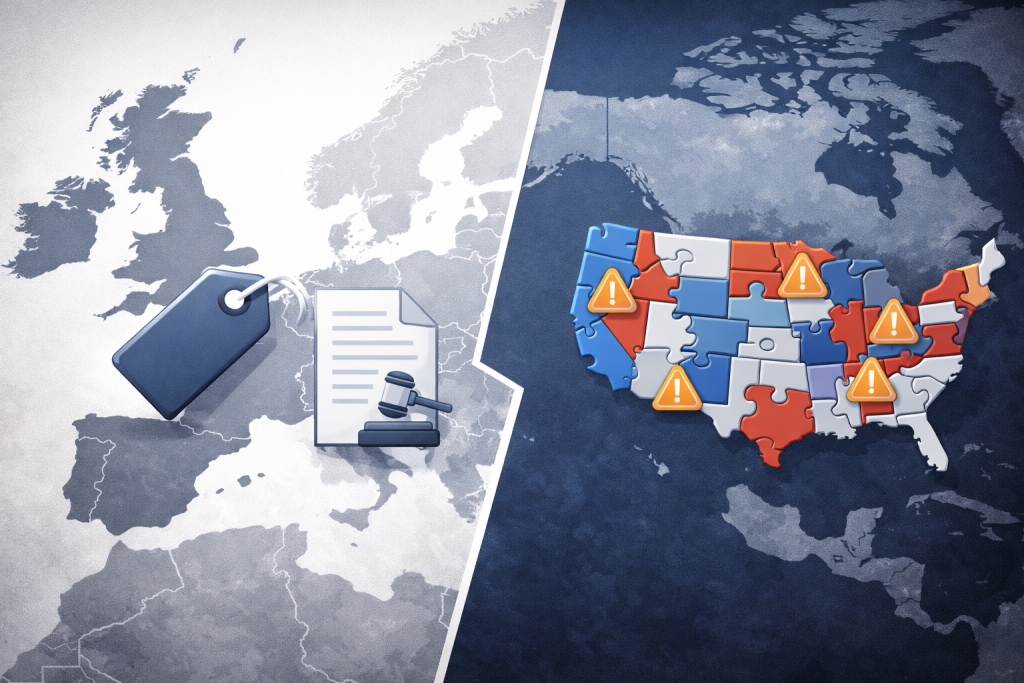
That’s why this story matters for both America and Europe. The tactics differ by market, but the pattern is the same: criminals are layering synthetic media on top of existing fraud models phishing, social engineering, account takeovers making them more convincing and more scalable.
The new fraud stack: synthetic media + social engineering + speed
Fraud has always been about psychology. What AI adds is throughput.
You can see the direction of travel in official loss figures. In the U.S., Federal Trade Commission data shows consumers reported losing more than $12.5 billion to fraud in 2024, a sharp increase year over year. The FTC notes the jump wasn’t driven by a huge spike in reports, but by a larger share of people reporting that they lost money. That is a classic signal of fraud tactics getting more effective at converting contact into payment.
Europe’s numbers tell a complementary story: payments are better protected by design, but attackers are adapting. A joint European Banking Authority/European Central Bank report on payment fraud found that strong customer authentication (SCA) remains effective against the types of fraud it was designed to stop especially for card payments, but also warned that fraudsters are increasingly shifting toward manipulating payers (authorized push payment-style scams and related social engineering). Even as overall rates can look stable, the total value of payment fraud in the European Economic Area increased to €4.2 billion in 2024, according to that press release summary.
The common denominator is simple: when it’s harder to hack systems, criminals work harder to hack people.
Voice cloning moves from “creepy” to operational
Voice cloning is one of the fastest routes from novelty to harm because it works in an environment built for urgency: phone calls.

In early February 2026, National Trading Standards in the UK warned of a “chilling” wave of AI-assisted phone scams that clone victims’ voices and use them to set up unauthorized direct debits. The mechanism described is telling: scammers gather personal information and voice samples, sometimes through “survey” calls and then use that audio to simulate consent over the phone.
The U.S. has been warning about the same underlying technique from another angle: impersonation. The FBI warned that scammers were using AI-generated voice to mimic senior U.S. officials, showing how synthetic audio can be operationalized against high-value targets and institutions.
This isn’t happening because voice clones are perfect. It’s happening because in real life, verification often collapses under pressure. A distressed call, a noisy connection, a demand for secrecy fraudsters don’t need studio-quality audio when the goal is to trigger a fast decision.
Deepfakes are expanding beyond “the victim” into “the workplace”
The industrial-scale warning isn’t limited to consumers. One of the most unsettling trends is deepfakes showing up inside workplace processes that were never built to resist synthetic identities.
The Guardian report on industrial-scale deepfake fraud describes incidents where deepfake tools were used to impersonate individuals and manipulate organizations, noting that scams and targeted manipulation have become the most frequently reported AI incidents in some tracking efforts. When corporate workflows treat a video call as identity proof, criminals can exploit that assumption.
The threat isn’t only the “fake CFO” storyline. It’s the mundane reality of modern business:
- remote interviewing and onboarding
- vendor approvals and procurement
- customer support identity checks
- invoice routing and payment authorization
When a workflow relies on “a human will notice,” scaling becomes the attacker’s advantage. Generative tools let bad actors try ten times, a hundred times, a thousand times until a tired employee or an overloaded help desk slips.
Europe’s authentication advantage, and why it’s not enough
Europe has structural strengths that should, in theory, help: strong customer authentication requirements under PSD2, bank-led verification ecosystems, and a more centralized regulatory posture.
But the EBA/ECB messaging matters: SCA is good at stopping what it was built to stop. Fraud is shifting into categories where the victim is “authorizing” the payment because they’ve been manipulated often through narrative pressure and false authority. In those cases, traditional security controls can be bypassed because the action looks legitimate from the bank’s perspective.
That is exactly where deepfakes and voice cloning fit: they aren’t only tools for “breaking in.” They are tools for getting a yes.
America’s scale problem: more platforms, more payments, more attack surface

In the U.S., the ecosystem is enormous: multiple payment rails, multiple banks, multiple platforms, and huge volumes of commerce that happen through messages and social feeds.
The FTC’s numbers are often used as a warning sign because they reflect a consumer environment saturated with scams. The U.S. challenge isn’t only fraud volume; it’s fragmentation. Solutions that work in one state, one platform, or one bank don’t automatically travel across the system.
That fragmentation also shapes law enforcement outcomes: it can be difficult to coordinate rapid action across platforms, payment providers, and jurisdictions especially when criminal operations are transnational.
Organized crime is learning faster than institutions
Europol has been blunt about the direction of travel: AI is turbocharging organized crime, and synthetic media is part of the toolkit used for fraud, blackmail, impersonation, and manipulation. While Europe is often better positioned to coordinate policy responses, Europol’s warnings underscore that adversaries can iterate quickly and exploit legal and operational gaps.
In practice, this means fraud is increasingly “productized.” The attacker doesn’t need to be an expert. They can buy access, use prebuilt kits, or outsource the hard parts.
What the next phase looks like
Three developments are likely to define the next 12–18 months:
1) More “hybrid” scams that blend real and fake.
The most convincing fraud doesn’t rely entirely on AI. It uses real data leaks, real photos, real account histories and then uses synthetic media to fill the gaps and close the deal.
2) A shift from content moderation to identity infrastructure.
Labeling deepfakes is useful, but it doesn’t stop a fake voice from convincing someone to transfer money. The bigger battleground is verification systems: call-back protocols, secure channels for payment approvals, and identity checks that don’t depend on a single biometric signal.
3) A credibility crisis for everyday media.
If deepfakes are “industrial,” skepticism becomes rational. That’s healthy in moderation but corrosive at scale. The danger is not only believing fakes; it’s losing confidence in authentic evidence.
The bottom line
The story of 2026 isn’t “deepfakes are getting better.” It’s that deepfakes are getting integrated, into scams, into workflows, into the places where trust becomes money.
America’s fraud landscape shows how quickly bad actors exploit scale and attention. Europe’s payment-security landscape shows how criminals adapt by manipulating people rather than systems. And warnings from institutions like Europol reinforce that this is not a temporary wave; it’s an evolving capability for organized crime.
If the industrialization frame is correct, then “spot the fake” will never be enough. The future belongs to verification models that assume deception is cheap and build friction where it counts.